

Graffiti, in its various forms, is a persistent reality in virtually every urban and suburban environment. While the volume and frequency may differ – Philadelphia, for instance, demonstrably experiences more graffiti than a suburb like Ardmore – the presence of unwanted graffiti and stickers on public infrastructure is a shared challenge. From postal boxes and street signs to utility control boxes, commercial corridors in both bustling cities and quieter suburbs bear the marks of graffiti.
The prompt and effective removal of graffiti is crucial for maintaining the aesthetic appeal and perceived safety of any area. The presence of graffiti is often linked to higher crime rates, fostering an unconscious sense of unease among visitors and residents. This negative perception can harm local businesses and diminish the overall enjoyment of a community as well as affect property values over the long term. Graffiti and its affect on Property Values
Decoding the Canvas: Types of Graffiti
To effectively address the issue, it is important to understand the different forms of graffiti you might encounter:
- Building Surface Graffiti: This involves paint-based markings applied to various building materials such as brick, limestone, and other common surfaces found in the Philadelphia region. This type of graffiti can deface both private and public properties. Building surface graffiti removal is typically handled with industry specific chemicals followed by hot water power washing.
- Street Fixture Graffiti: This category includes paint or marker tags found on public amenities like street signs, light poles, control boxes, and postal relay boxes. Identifying responsibility for removal can be complex as these fixtures are often maintained by different municipal entities who may not be concerned with the presence of graffiti. Street fixture graffiti removal involves chemicals, razor blades, heat guns and rags with a lot of elbow grease.
- Acid Etch or Scratch Graffiti on Glass: This damaging form of graffiti involves using acid or a carbide pen to etch or scratch tags directly onto glass surfaces, affecting both private and public properties. Since the glass surface has been altered, we can’t remove the graffiti, we must restore the glass by grinding it down to its lowest point of contact then polishing it back to transparency. Glass Restoration with demonstration video
- Vehicle Graffiti: Box trucks, vans, buses and trains are all targeted. Removal of vehicle graffiti can be a combination of power washing and by-hand removal
Vehicle Graffiti and Building surface graffiti removal may be covered by property insurance. Read what you need to know here: Graffiti and Insurance
Understanding the “Why”
Why graffiti writers are motivated to tag will differ from person to person. Many find it a form of artistic expression, and like any other artist, they want their work to be seen.
The primary objective for many graffiti artists is to achieve and maintain visibility – to “stay up.” This desire to have their tags endure influences their methods:
- Increasing Removal Difficulty: Graffiti writers often target hard-to-reach surfaces, such as areas above the ground floor, or inflict considerable damage using methods like acid etching. The logic is simple: the more challenging and costly the removal, the longer their work will remain.
- Exploiting Neglected Surfaces: They may also choose surfaces they believe are less likely to be addressed promptly, such as the less visible side of a sign or a newly cleared roadside. Graffiti artists are observant and adapt to their environment.
- The “Graffiti Attracts Graffiti” Phenomenon: The presence of existing graffiti can unfortunately encourage further tagging, creating a cycle of defacement and a snowball effect.
- Correlation with Higher Crime Areas: Graffiti writers may choose areas with higher crime rates, due to law enforcement focusing on more serious offenses and property owners potentially being less inclined or able to invest in removal.
These tactics employed by graffiti writers present significant challenges for property owners, civic associations, and local businesses striving to maintain a clean and attractive environment.
Navigating the Challenges: Responsibility and Resources
Addressing graffiti removal often involves navigating a complex web of responsibility and resource allocation:
- Building Surfaces: The onus of removing graffiti from building surfaces typically falls on the property owner for private buildings or the municipality for public structures.
- Street Fixtures: The responsibility for removing graffiti from street fixtures generally lies with the municipality. However, when municipal resources are stretched thin, Business Improvement Districts (BIDs), such as the Center City District in Philadelphia, or Civic Associations, like the Society Hill Civic Association, often step in to provide graffiti removal services to their members as a proactive measure.
The approach to graffiti removal can vary significantly between areas. For example, a property owner on Lancaster Avenue in Ardmore is likely to address graffiti on their private property quickly. However, a tag on the back of a street sign in Ardmore might persist longer than a similar tag in Society Hill or Center City. This is often because well-funded organizations in areas like Society Hill and Center City implement ongoing, proactive graffiti removal programs targeting street fixtures due to higher levels of repeat graffiti (albeit with less successful methods), while areas like Ardmore may take a more reactive approach.
Read more about the issues facing ongoing removal programs in Philadelphia.
The effectiveness of graffiti removal hinges on several factors: the cost of removal, available financial resources, and the motivation of residents and business owners. It is a realistic observation that a civic association in a more affluent area like Society Hill may have greater financial resources and a stronger impetus to remove graffiti within its boundaries compared to a civic association in a less affluent neighborhood like Kensington in Philadelphia.
Taking Action: Proactive Strategies for a Cleaner Community
Adopting a proactive approach to graffiti removal is the most effective strategy for private property owners, civic associations, and business improvement districts alike. Engaging an experienced graffiti removal company, rather than assigning the task to existing employees or general service providers, will yield significantly better results in both the short and long term.
A specialized graffiti removal company has the necessary tools, equipment, training, and techniques to effectively address all types of graffiti on any surface, ensuring a clean and damage-free result. Simply removing the graffiti is not enough; the goal is to restore the surface to its original condition.
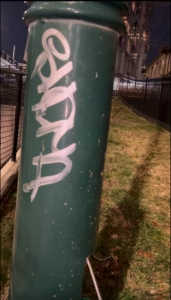
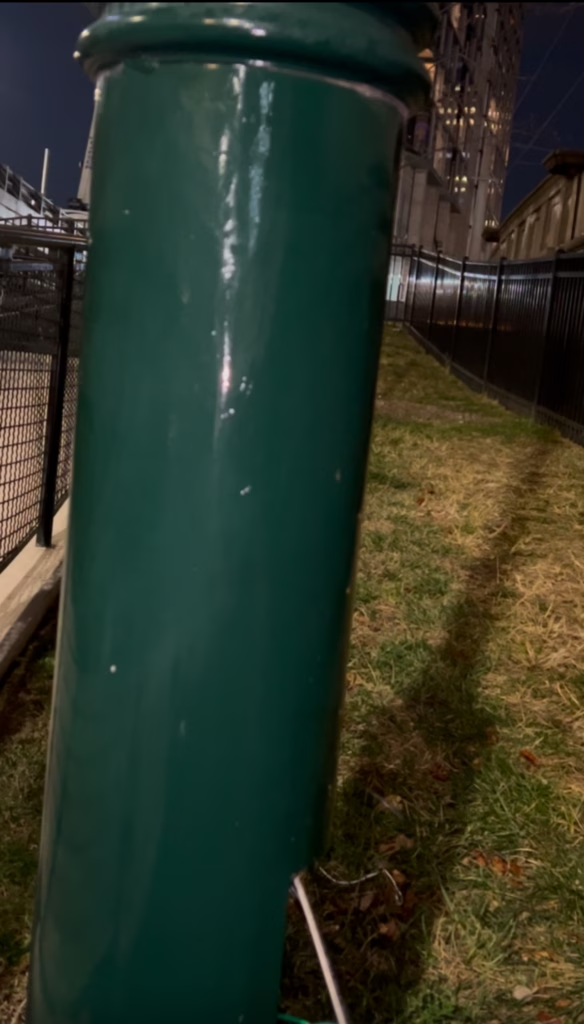
To establish a successful ongoing removal program, we collaborate closely with organizations and property owners to develop customized plans tailored to their specific needs, considering the prevalence of graffiti in their area and their desired outcome of minimizing visible tagging.
A typical service agreement involves a commitment to clear all street fixtures of graffiti and stickers within a defined area (e.g., between point A and point B) at agreed-upon intervals. I call this “resetting the canvas” These agreements often include discounted rates for building surface graffiti removal for residents and businesses within the covered zone. Read more on our ongoing removal programs
Furthermore, anti-graffiti coatings are available for building surfaces. These innovative products are designed to make future graffiti removal significantly easier, faster, and less expensive, acting as a protective measure. Read more on Anti-Graffiti Coatings Anti-Graffiti Coating Blog Post
In Conclusion
Don’t allow unwanted graffiti to detract from the beauty, vibrancy, and perceived safety of your business, property or neighborhood. Understanding the challenges and embracing a proactive approach are the essential first steps towards creating a cleaner and more appealing environment. Whether you are a property owner grappling with persistent tagging or a member of a civic association dedicated to enhancing your community, exploring professional graffiti removal services is a crucial and worthwhile investment. Contact experienced providers like RGR Power Washing today to discuss tailored solutions and take concrete action in reclaiming your visual landscape.
Comments are closed